

Download documents
Download our briefingBackground
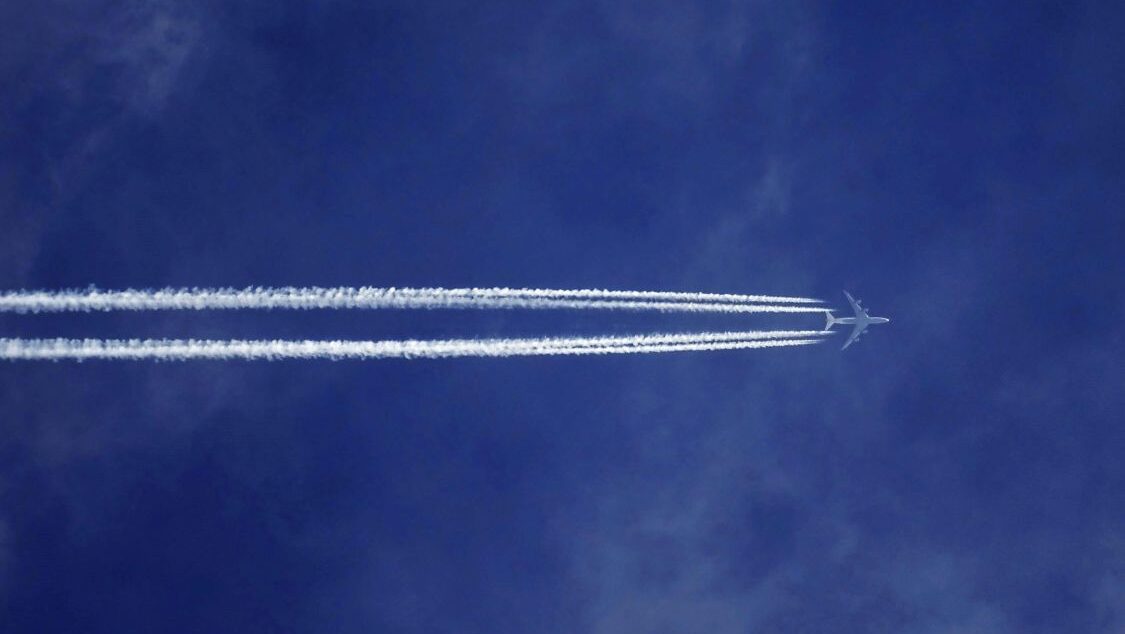
Aviation’s CO2 problem is well understood, but these planet-warming emissions only tell part of the story: aviation also causes non-CO2 climate impacts, like contrails, which could be twice as damaging as CO2 on short timescales. Despite their importance, EU policy to address aviation non-CO2 impacts remains underdeveloped. In this factsheet, we outline how the 2026 EU ETS revision is a crucial opportunity to address this oversight.
Flights departing Europe emitted 140m tonnes of CO2 in 2023, roughly the same as all greenhouse gases (GHGs) emitted by the Netherlands in the same year. The EU ETS currently only prices flights within Europe, a glaring oversight which means that most of these CO2 emissions remain unpriced, resulting in over 1bn CO2 going unregulated between 2012-2023 to the tune of €26bn in lost revenues.
The scale of the problem
In addition to CO2 emissions, flying also causes non-CO2 climate impacts, including from contrails and nitrogen oxide (NOx) emissions, which could be twice as damaging as CO2 on short timescales. Countries are legally required to include aviation’s non-CO2 impacts in their climate plans, but other than the recently-implemented monitoring, reporting and verification (MRV) directive, non-CO2 aviation impacts are not addressed by EU policy.
Some in the aviation industry continue to claim that the science is too uncertain to address its non-CO2 impacts. While there are undoubtedly gaps in our knowledge, we know that aviation’s non-CO2 climate impacts are significant, and we now know enough that not acting would be irresponsible in light of the climate crisis.
What’s covered in the report?
This factsheet marks the first in a series of pieces which will outline how EU policy must tackle aviation’s full climate footprint, including the sector’s non-CO2 impacts.
The factsheet covers:
- An overview of aviation’s non-CO2 climate impacts; information on the level of scientific understanding of these impacts.
- How uncertainty must not prevent taking action.
- How the 2026 EU ETS revision is a crucial opportunity to ensure that aviation’s full climate footprint is regulated.
Our recommendations
- The current non-CO2 MRV requirement in the EU ETS is expanded to all arriving and departing flights from 2027 as planned.
- New policy is introduced to encourage airlines to reduce their non-CO2 climate impacts.